Since 2006,Howvin Most famous outdoor furniture brand, best choice for Hotels, Resorts, Restaurants and Villas.
Language
Since 2006,Howvin Most famous outdoor furniture brand, best choice for Hotels, Resorts, Restaurants and Villas.
Let’s be honest: when you’re outfitting a luxury beach resort, a high-traffic hotel poolside, or a sprawling commercial patio, the absolute last thing you want is a flood of negative reviews from guests complaining that the seats are literally scorching their skin. Commercial buyers invest heavily in structural aesthetics, making material physics a primary concern.
When analyzing HDPE furniture heat resistance, procurement managers consistently raise two critical questions before signing off on a major invoice: Does high-density polyethylene turn into a frying pan under direct sunlight? And will those vibrant, branded color schemes dull out into a chalky mess after a single season of intense exposure?
The short answer is no—but only if you know exactly what grade of raw materials you are buying. Let's look closely at how premium recycled plastic lumber holds up against extreme heat and UV exposure.

☀️ The Thermal Reality: Does HDPE Burn in Direct Sun?
Let’s dispel a common myth right away. HDPE is a polymer, and like any material sitting under a 95°F mid-day sun, it will absorb thermal energy and get warm to the touch. However, there is a massive physical difference between a material being warm and a material retaining burning heat.
The secret lies in a property known as thermal conductivity. Metals, such as aluminum and cast iron, possess incredibly high thermal conductivity; they rapidly pull heat from the sun and transfer it instantly to anything touching them. HDPE behaves much more like natural teak or shorea wood. It has an exceptionally low thermal conductivity rate.
Even when a dark charcoal outdoor sectional sofa manufactured from high-grade poly lumber sits on a beachfront deck all afternoon, it remains safe to sit on. It won't flash-fry your guests' skin the way a bare metal frame will.
For commercial properties sourcing an outdoor furniture set for high-exposure environments like public gardens or open-air hotel balconies, picking a lighter color palette—such as sand, white, or light gray—reduces thermal absorption even further. This ensures ultimate guest comfort during peak July afternoons.

📊 Material Performance Comparison
To help your procurement team visualize how high-density polyethylene stacks up against traditional hospitality materials, review this structural performance matrix:
Material Type | HDPE poly lumber seating | Traditional Cast Aluminum | Treated Commercial Timber | Low-Grade PVC/Plastic |
Heat Retention | 🌡️ Low to Moderate (Stays safe to touch) | 🔥 Extremely High (Can cause burns) | 🪵 Low (Stays cool) | 🪵 Moderate to High |
UV Color Degradation | 🛡️ Less than 5% over a decade (with UV inhibitors) | ⚠️ Paint chips/fades within 2–4 years | 🪵 Fades to silver-gray within months | ❌ Yellows and becomes brittle |
Splitting / Cracking | 🚫 Absolute Zero | 🚫 Zero | ❌ High risk (Requires constant sanding) | ❌ High risk under thermal stress |
Saltwater Resistance | 🌊 100% Waterproof & Rustproof | ⚠️ Corodes over time without powder coating | ❌ rots and warps from humidity | 🌊 Waterproof but weakens |
Maintenance Profile | 🧼 Power-wash or wipe down with soap | 🔧 Repainting and rust treatment needed | 🪓 Annual sealing, oiling, and staining | 🗑️ Frequent structural replacements |
🎨 The Chemistry of Fade Resistance: Inside the Color Matrix
A major frustration for estate managers and hospitality owners is watching a beautiful layout turn into an eyesore due to sun bleaching. When dealing with low-grade retail plastics, the color is typically just a thin layer sprayed onto the exterior surface. Once the sun beats down on it, that micro-layer breaks down, flakes away, and loses its vibrancy.
Commercial-grade high-density polyethylene solves this issue through an industrial manufacturing process called compound masterbatching.
Instead of painting the finished product, raw pigment dyes are melted directly into the raw HDPE pellets along with advanced ultraviolet stabilizers (typically categorized as UV-8 or UV-15 protectants) before the lumber profiles are extruded.
This means the color isn’t just on the surface; it is embedded completely throughout the entire structural matrix of the board. If a guest accidentally scratches the arm of a chair at a beach resort, the interior material is the exact same shade as the outside.
Furthermore, industrial-grade UV inhibitors act like a permanent, high-SPF sunscreen built directly into the furniture. They absorb and safely dissipate damaging UVA and UVB rays before they can break down the polymer chains, keeping your investment looking pristine for years.
Designing Structural Layouts Across B2B Applications
Every commercial space presents its own unique environmental challenges. Let's break down how to optimize your placement choices across common professional project layouts:
🏨 Luxury Hotels & Poolside Decks
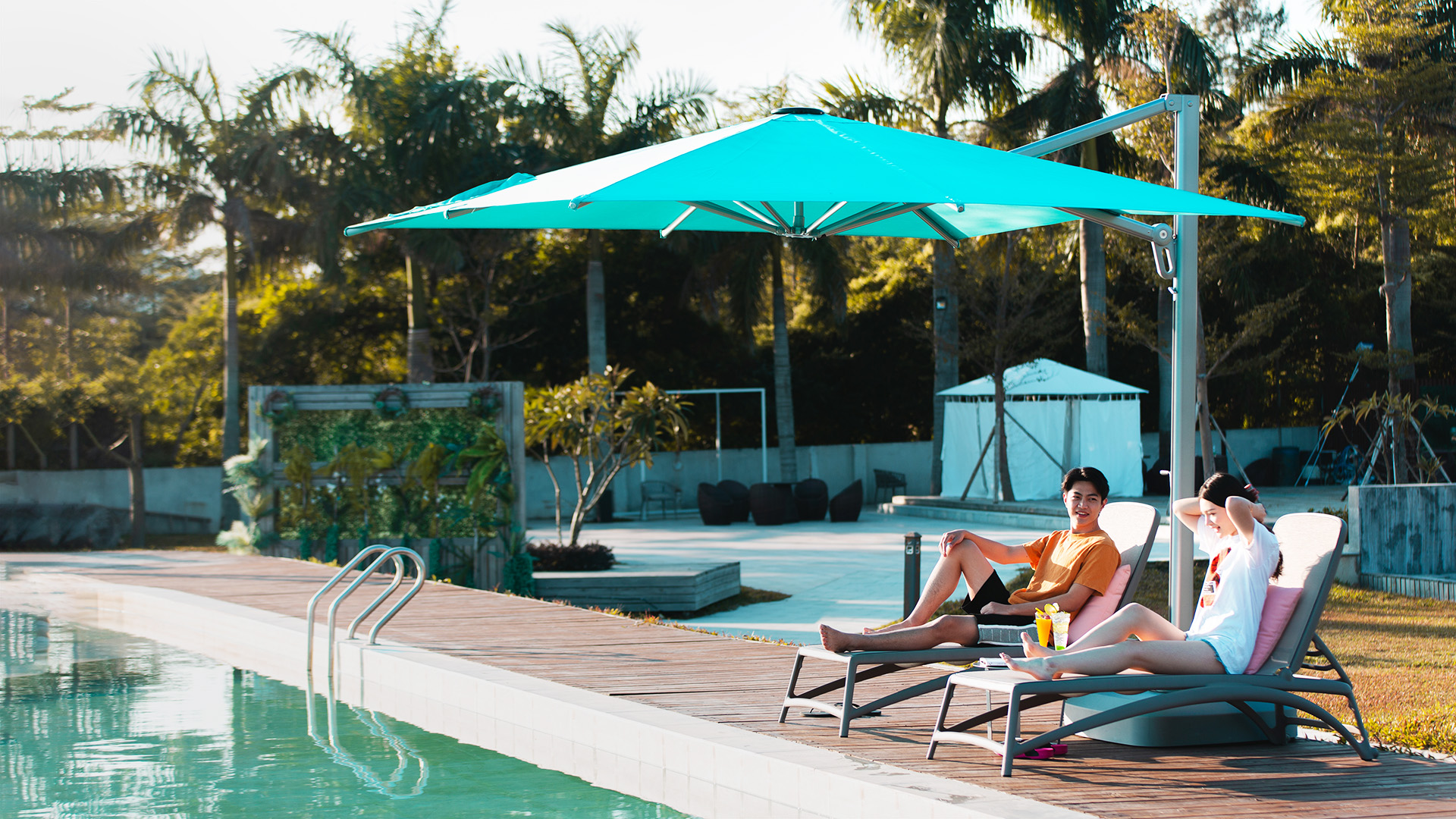
Pool decks are brutal environments combining intense, direct overhead sunlight with highly reflective water surfaces and chemically aggressive chlorinated splash-back. If you lay out metal loungers, guests will constantly drape multiple towels over them just to survive the heat.
Deploying high-quality poly lumber here guarantees structural longevity. Because it completely resists moisture absorption, it won’t rot from pool water, and its optimized HDPE furniture heat resistance keeps the seating surface comfortable for guests in swimwear.
🏖️ Salt-Heavy Beachfront Resorts
Beachfront settings introduce a highly destructive combination of blistering sun, blistering wind, and corrosive, salt-heavy sea spray. Traditional wood warps and splits within seasons under these conditions, while hollow metals quickly begin to pit and corrode from the inside out.
HDPE is completely chemically inert, meaning salt air cannot penetrate its surface. It won't degrade, and its built-in UV package ensures the bright, coastal color schemes don't dull out from intense ocean sun reflections.
🏡 Public Gardens & Corporate Courtyards
For heavy-duty public settings, choosing structural designs that withstand both intense weather and high-volume public usage is vital. Specifying heavy, solid-profile polymer benches ensures they won't blow over during storms while eliminating the ongoing operational costs of seasonal sanding, staining, and varnishing required by natural wood.

🛠️ Essential Procurement Checklists for B2B Buyers
Before issuing a purchase order for mass outdoor seating, your engineering or design team should verify that the manufacturer's technical specifications line up with high-performance criteria:
1.Weight Profile: Ensure the product uses solid, heavy-duty extruded profiles rather than hollow, injection-molded components. Solid poly furniture averages 40–60 lbs per chair, meaning it won’t blow into the swimming pool during heavy coastal winds.
2.Hardware Materials: Verify that every screw, bolt, and brad is marine-grade 316 stainless steel. Lower-grade hardware will bleed ugly rust trails down the sides of your light-colored furniture over time.
3.UV Certification: Request test data validating that the raw compounding mixture includes a minimum rating of UV-8 stabilizers to ensure long-term color fastness.
By insisting on these specific technical manufacturing standards, commercial properties can confidently eliminate recurring maintenance cycles, minimize guest complaints, and maximize the long-term return on investment for their outdoor assets.
FAQ:
Q1: Does heavy dark-colored HDPE poly lumber get significantly hotter than lighter shades?
Yes, basic thermodynamic principles apply to all polymers: darker colors like textured black, charcoal gray, or deep navy blue absorb more light energy than white, sand, or light gray tones.
However, because the overall thermal conductivity of the material remains exceptionally low, even dark-colored poly lumber will not transfer heat aggressively into human skin the way exposed metal frames do. For unshaded, high-exposure poolside decks, we generally recommend opting for mid-to-light tones to ensure maximum guest comfort.
Q2: What exact cleaning protocols are required to maintain commercial HDPE furniture?
One of the most attractive operational benefits of high-density polyethylene is its nearly non-existent maintenance schedule. For standard dust and light grime, a simple wash down with a garden hose or a wipe with mild dish soap and warm water is all it takes.
For heavy-duty deep cleans between busy seasonal check-ins, the material can safely withstand high-pressure washing (up to 1,500 PSI) without any risk of surface splintering, peeling, or cracking.
Q3: How does premium poly lumber handle extreme sub-zero winter temperatures?
While this guide focuses on extreme summer heat, poly lumber performs equally well on the opposite end of the spectrum. Because the material is non-porous, it cannot absorb environmental moisture.
When temperatures plummet below freezing, there is zero internal water to freeze, expand, and cause structural cracking. This allows ski resorts and high-altitude properties to leave their outdoor layouts fully exposed all winter long without utilizing valuable storage space.
Q4: Is HDPE furniture truly eco-friendly, and can it contribute to our corporate ESG metrics?
Absolutely. High-grade commercial poly lumber is typically constructed from up to 90% post-consumer recycled plastics, primarily diverted from discarded milk jugs and detergent bottles.
By integrating these products into your property’s design layout, you are actively preventing thousands of pounds of plastic waste from entering landfills or ocean ecosystems. This provides clean, verifiable data points that your marketing team can leverage to meet modern corporate sustainability goals.